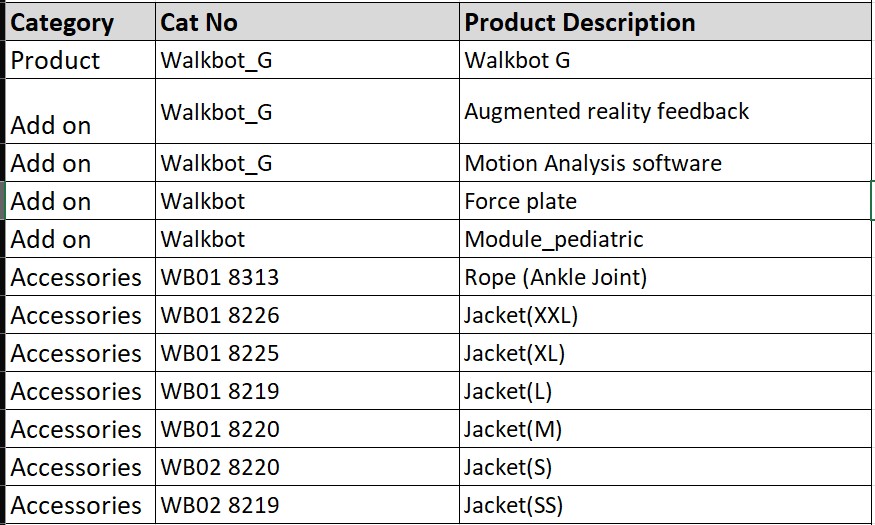
Walkbot_Robotic Gait Trainer
Product Description
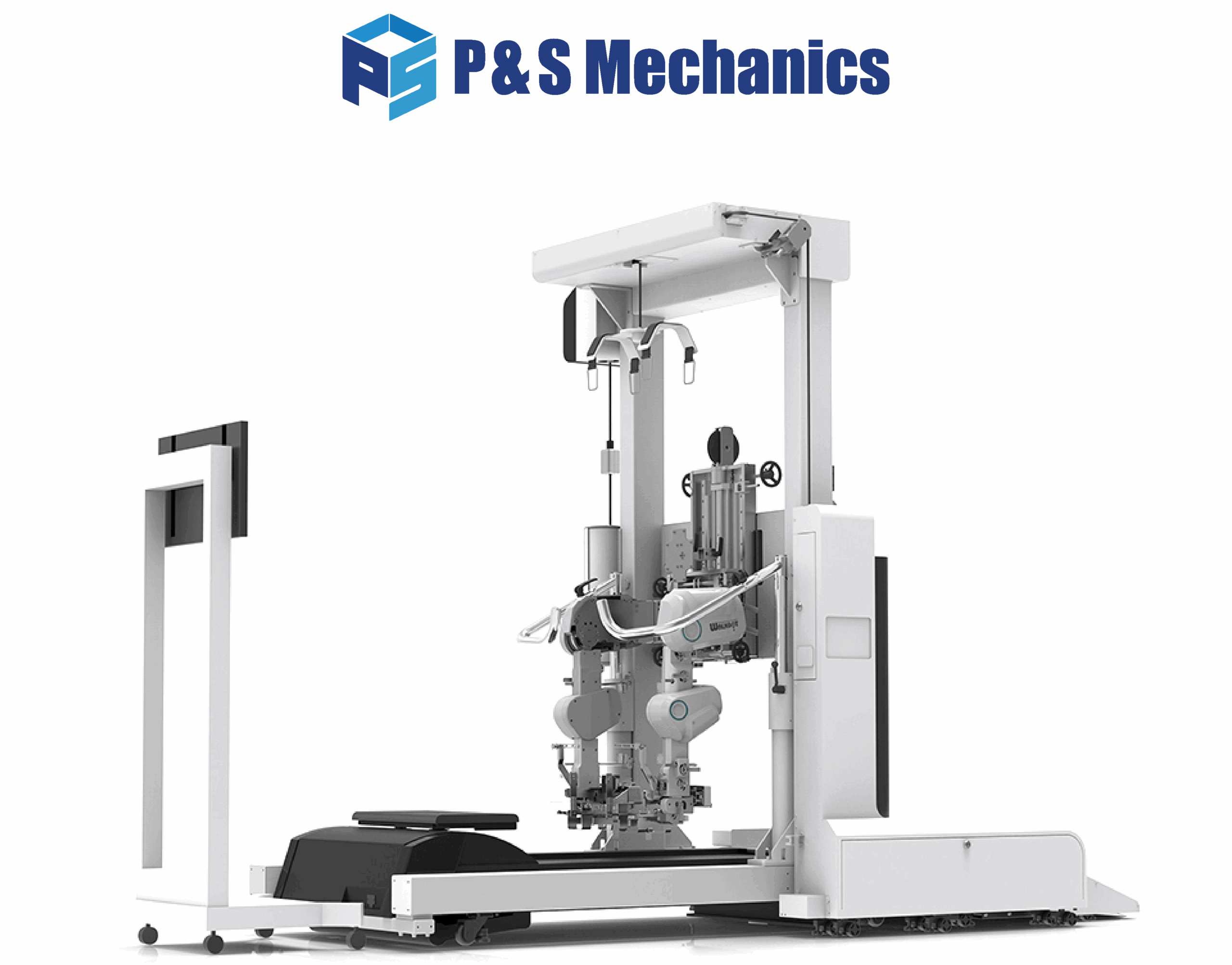
Walkbot is a rehabilitation medical device that is robot-assisted gait training system for locomotion-impaired patients. It is applicable with a variety cause of disease such as stroke, SCI (spinal cord injury), brain tumors, multiple sclerosis, cerebral palsy, etc.
Walkbot provide natural, accurate gait pattern for individual, using Hip/Knee/Ankle joint drive motor.
So it helps fast recovery after the training.
Walkbot were created into superior being-interactive, functional, strengthening, motivating, natural, cost-effective locomotor system for adults with neurological or musculoskeletal impairments who wish to achieve their dreams of re-walking for perfection.
Core Functional Capabilities
-
Full joint-driven gait training — Motors at the hip, knee, and ankle ensure a natural, biomechanically accurate walking pattern.
-
Dynamic body-weight support (BWSTT) — Adjustable support up to 100 kg, maintainable during ongoing therapy.
-
Interactive training modes — Automatically adapts to the patient’s effort in real-time by adjusting speed, resistance, and kinematics for optimized engagement.
Advanced Training & Feedback Tools
- 3D Motion Simulation — Provides detailed kinematic feedback and visual output for gait training.
- Active Augmented Reality (AR) Feedback Software (optional) — Turns therapy into engaging, game-like sessions (e.g., virtual environments or tasks like kicking a ball).
- Force Plate (optional) — Integrates quantitative ground reaction force data into gait analysis and training.
Customization & Evaluation
-
Robot sensitivity tuning — Facilitates personalized assistance/resistance based on patient-specific needs
-
Evaluation tools — Provides metrics on range of motion (ROM), stiffness, and force assessments
-
Optional 3D Active Virtual Reality Software — Enhances immersion and feedback during therapy.
- Stroke
- Multiple sclerosis (MS)
- Cerebral palsy (CP)
- Parkinson’s disease
- Paraplegia
- Traumatic brain and spinal cord injury
- Hip arthroplasty
- Hemiplegic patients
- Spinal muscular atrophy
- Prosthesis after amputation
- Muscle weakness due to lack of mobility